
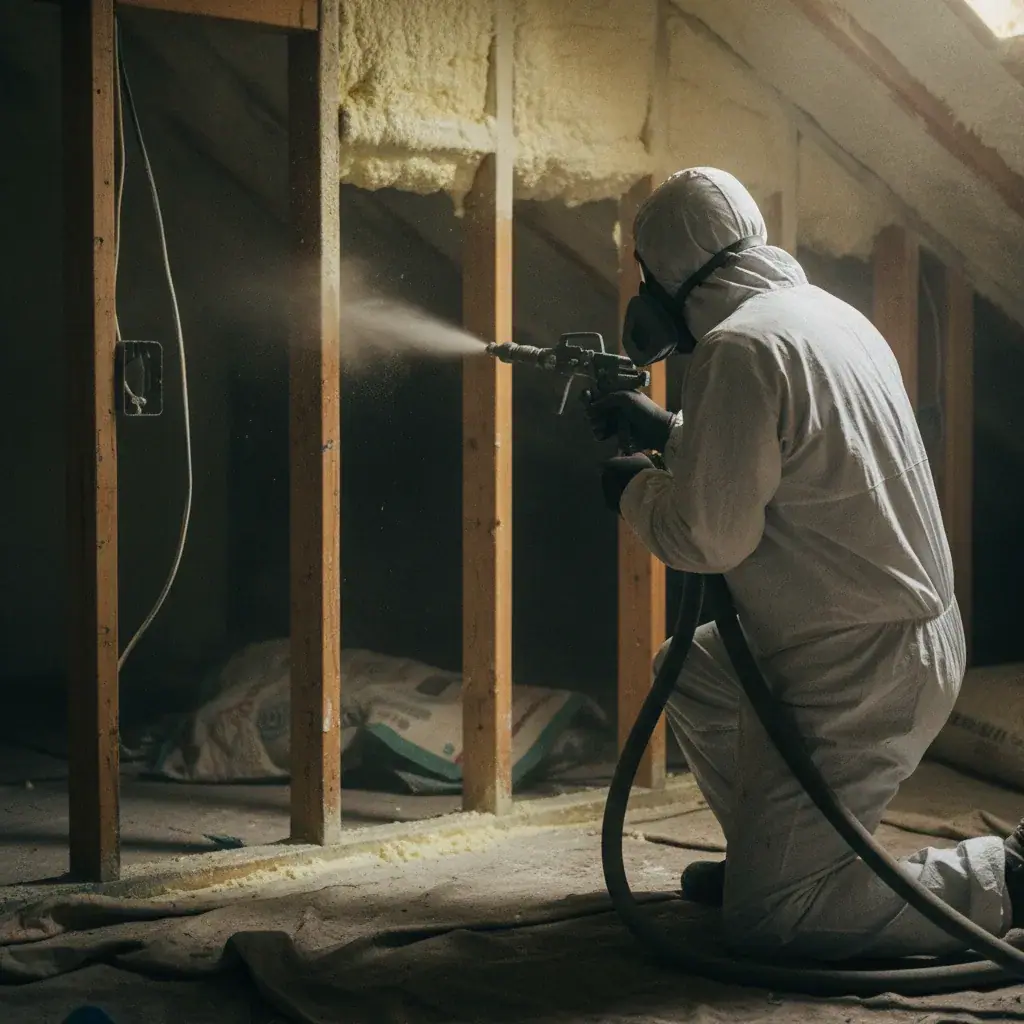
Spray Foam Attic Insulation in Newport Beach, CA
Energy-Saving Spray Foam Attic Insulation for Newport Beach, CA Homes — Licensed & Insured
Expert spray foam attic insulation in Newport Beach, CA. Coastal climate specialists serving Balboa Island, Corona del Mar & all neighborhoods. Call (949) 828-0703.
Spray foam attic insulation is a high-performance insulation solution that seals and insulates your attic simultaneously, creating an air-tight thermal envelope that dramatically reduces energy loss. Unlike traditional batt or blown-in insulation, spray polyurethane foam expands on contact to fill every gap, crack, and penetration in your attic space — delivering superior R-values and moisture resistance in a single application.
Newport Beach presents a unique insulation environment. The coastal marine layer that rolls in off the Pacific, the salt-laden air from Newport Harbor, and the dramatic temperature swings between oceanfront and inland neighborhoods all affect how attics perform. Homes along Balboa Peninsula and Crystal Cove experience different humidity and air infiltration challenges than properties in Harbor View Hills or Newport Heights.
Read moreShow less
At Energy Wise Attic Insulation, our team understands the specific building stock, climate microclimates, and energy codes governing Newport Beach properties. We deliver spray foam attic insulation solutions calibrated precisely for Southern California’s coastal conditions. Call us today at (949) 828-0703 to schedule your assessment.
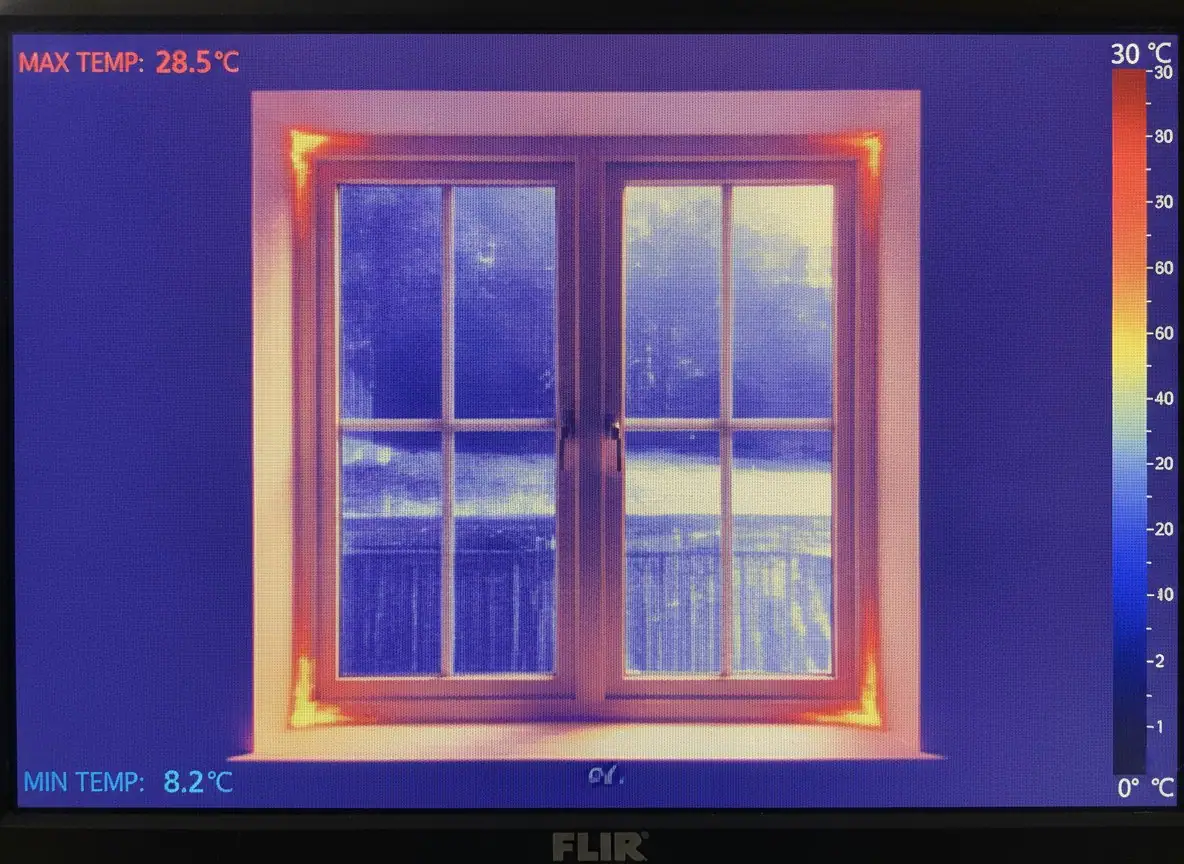
Understanding Spray Foam Attic Insulation
Spray foam attic insulation uses a two-component polyurethane system — isocyanate and polyol resin — that are mixed at the spray tip and expand rapidly upon application. The foam bonds directly to rafters, roof decking, joists, and wall plates, creating a monolithic layer that functions as both insulation and air barrier. This dual function is what distinguishes spray foam from every other insulation product on the market.
There are two primary types used in attic applications: open-cell spray foam and closed-cell spray foam. Open-cell foam, sometimes called half-pound foam, expands dramatically and achieves an R-value of approximately R-3.5 to R-4 per inch. It is vapor-permeable and offers excellent sound dampening. Closed-cell foam, or two-pound foam, is denser, achieves R-6 to R-7 per inch, and acts as a Class II vapor retarder — critically important in coastal environments where moisture infiltration is a persistent concern.
Read moreShow less
The technology traces its commercial roots to the 1940s, when polyurethane chemistry was first developed. Residential spray foam became widespread in the 1980s and experienced exponential adoption following the energy crises of the 1970s. California’s Title 24 Energy Code, which has grown progressively more demanding since its 1978 introduction, has accelerated demand for spray foam across the state, particularly in coastal counties like Orange County where conditioning costs are tied closely to ocean-air infiltration.
Newport Beach’s residential building stock spans multiple eras. Mid-century homes built between 1945 and 1970 in areas like Dover Shores and Lido Isle were often constructed with minimal insulation by modern standards — frequently R-11 or less in attic spaces. Post-1978 homes incorporated better practices but still fall short of today’s Title 24 requirements. More recent construction from the 2000s onward approaches modern standards but can still benefit from spray foam upgrades, particularly in older framing systems where air leakage has developed over time.
In crawl space applications, spray foam is equally effective, and many Newport Beach properties with pier-and-beam foundations or raised foundations benefit from crawl space insulation in tandem with attic work for a whole-home thermal envelope.
Why Spray Foam Attic Insulation Is Needed in Newport Beach, CA
The Marine Layer and Coastal Humidity
Newport Beach experiences the classic Southern California marine layer from May through September — locally referred to as “June Gloom,” though it extends well beyond that month. Morning relative humidity along the Balboa Peninsula regularly reaches 85 to 95 percent. This moisture-laden air infiltrates attic spaces through soffit vents, ridge vents, and penetrations around electrical and plumbing fixtures. Over time, elevated attic humidity — consistently above 60 percent — degrades traditional fiberglass batts, promotes mold growth on wood sheathing, and reduces effective R-values by as much as 40 percent in saturated insulation. Spray foam’s closed-cell variant provides a Class II vapor retarder, stopping moisture migration before it reaches temperature-sensitive surfaces.
Salt Air Corrosion and HVAC Penetrations
Properties within one mile of Newport Harbor and the Pacific shoreline — including homes on Balboa Island, Linda Isle, and along Pacific Coast Highway — face accelerated corrosion of metal fasteners, HVAC ductwork penetrations, and electrical conduit. These corroded penetrations widen over time, creating air gaps that bypass even well-installed batt insulation. Spray foam physically seals these gaps, preventing conditioned air from escaping into the attic cavity and drawing unconditioned, salt-laden air in return.
Temperature Differentials Between Coastal and Inland Neighborhoods
Newport Beach’s geography creates pronounced temperature microclimates. On a typical summer afternoon, the temperature differential between Balboa Peninsula (commonly 68–72°F) and the inland edge of Newport Beach near MacArthur Boulevard can reach 15 to 18 degrees Fahrenheit. Homes in Harbor View Hills and Bonita Canyon experience significantly more cooling load demand than oceanfront properties — yet both face the marine layer humidity challenge. An attic without proper spray foam insulation allows radiant heat from roof decking (which can reach 140–160°F on summer afternoons) to overwhelm HVAC systems, driving energy bills upward and shortening equipment life.
California Title 24 Energy Code Requirements
California’s 2022 Title 24 Energy Code requires minimum attic insulation of R-38 in Climate Zone 6, which encompasses Newport Beach. Many homes built before 1985 fall well below this threshold. Spray foam applied at appropriate depths achieves and exceeds this standard while simultaneously eliminating the air leakage pathways that undermine code-compliant but poorly air-sealed insulation assemblies. Homeowners planning to sell must increasingly disclose insulation status to buyers, making upgrades a sound investment in property value as well as comfort.
Wildfire Smoke and Air Quality Events
Orange County experiences periodic air quality emergencies from wildland fires, including the 2020 Silverado Fire that burned more than 13,000 acres in the hills east of Irvine and affected air quality throughout the Newport Beach area for days. Homes with poorly sealed attics allowed smoke particulate to infiltrate living spaces. Spray foam’s air-sealing properties dramatically reduce the infiltration of outdoor air pollutants during these events, protecting occupants with respiratory sensitivities.
Free, no-obligation estimates
Talk to Energy Wise Attic Insulation
Tell us what you need and we’ll take it from there.
Signs You Need Spray Foam Attic Insulation in Newport Beach
Energy Performance Indicators
- Monthly SCE or SoCalGas bills that have increased more than 15 percent year-over-year without a corresponding lifestyle change
- HVAC system running continuously during mild Newport Beach afternoons (65–75°F exterior) without reaching set temperature
- Visible daylight through attic venting or penetration points when inspecting with lights off
Comfort and Indoor Environment Indicators
- Upper-floor rooms that are consistently 5°F or more warmer than ground-floor rooms during summer
- Persistent musty or salt odor in upstairs bedrooms, particularly after marine layer mornings
- Condensation or water staining on attic-adjacent ceilings, especially in Balboa Peninsula or Lido Isle homes near the harbor
- Allergy symptoms that worsen when HVAC runs, suggesting particulate infiltration through unsealed attic pathways
Physical Attic Inspection Indicators
- Existing fiberglass batts that appear compressed, discolored, or matted — signs of moisture damage
- Dark staining on attic joists or roof decking indicating long-term moisture accumulation
- Visible gaps around recessed lighting cans, plumbing vents, or HVAC duct boots
- Existing blown-in insulation with a depth below 10 inches (indicating R-values below current Title 24 minimums)
Urgency Indicators
Any visible mold growth on wood surfaces, active condensation dripping from HVAC equipment in the attic, or insulation that has fallen away from its original position represents an urgent situation requiring immediate insulation removal and replacement before health and structural consequences worsen.
Our process
Our Spray Foam Attic Insulation Process
Energy Wise Attic Insulation follows a structured, transparent process designed to deliver lasting results for Newport Beach homeowners. Here is what to expect from initial contact through project completion.
- 01
Free On-Site Assessment (1–2 Hours)
Our technician visits your property and conducts a comprehensive attic inspection. We measure existing insulation depth, assess air sealing deficiencies, photograph problem areas, and evaluate your HVAC system’s attic exposure. For Newport Beach coastal proper
- 02
Detailed Written Proposal (24–48 Hours)
We deliver a written scope of work specifying foam type (open-cell or closed-cell), target R-value, square footage to be treated, and itemized pricing. We include applicable California rebate programs from SCE or SoCalGas where available.
- 03
Existing Insulation Removal (If Required, Half to Full Day)
If existing insulation is damaged, contaminated, or incompatible with spray foam application, our team performs complete insulation removal using HEPA-filtered vacuum equipment. All debris is bagged and disposed of per Orange County waste guidelines.
- 04
Surface Preparation and Air Sealing (2–4 Hours)
Before foam application, we seal large penetrations with fire-rated caulk or foam backer rod, protect HVAC equipment and recessed lights with temporary coverings, and ensure adequate ventilation for the application crew. This step is especially important in Ne
- 05
Spray Foam Application (3–6 Hours Depending on Attic Size)
Trained technicians apply spray foam in passes, building to the specified thickness. Closed-cell foam is applied in 2-inch lifts to prevent exothermic overheating. Open-cell foam can be applied in thicker single passes. Temperature and humidity are monitored t
- 06
Quality Inspection and Thickness Verification (1 Hour)
We use calibrated depth probes to verify R-value thickness across the entire attic floor and roof deck. Any thin spots are immediately supplemented. We photograph completed work for your records and our quality file.
- 07
Site Cleanup and Final Walkthrough (30–60 Minutes)
All protective coverings are removed, the attic access area is cleaned, and a technician walks you through the completed work, explains the curing timeline (typically 24 hours for full cure), and answers any questions about post-installation care.
Spray Foam Methods and Approaches for Newport Beach Attics
Closed-Cell Spray Foam (Two-Pound Density)
Closed-cell spray foam is our primary recommendation for Newport Beach properties within two miles of the coastline, including Balboa Island, Lido Isle, Balboa Peninsula, and Corona del Mar. Its Class II vapor retarder properties (permeance rating of 0.1 to 1.0 perms at 2 inches) prevent marine layer moisture from migrating into wood framing. Achieving R-38 with closed-cell foam requires approximately 5.5 to 6 inches of application depth. Cost is higher than open-cell, but the moisture protection justification is clear in coastal exposures.
Open-Cell Spray Foam (Half-Pound Density)
Open-cell foam is appropriate for Newport Beach’s inland neighborhoods — Harbor View Hills, Bonita Canyon, and areas east of Jamboree Road — where humidity exposure is lower. Achieving R-38 requires approximately 9.5 to 10 inches of open-cell foam. Its superior sound attenuation (STC ratings 10–15 points higher than closed-cell) makes it popular for two-story homes where attic noise transmission is a concern.
Flash-and-Batt Hybrid Approach
A 2-inch closed-cell flash coat applied to the roof deck followed by blown-in fiberglass or cellulose fill is a cost-effective hybrid that delivers vapor control at the roof deck while using more affordable insulation for the remaining R-value. This is well-suited for Newport Beach’s mid-range coastal neighborhoods where full closed-cell coverage may exceed budget constraints.
Unvented Roof Assembly (Hot Roof Application)
For Newport Beach homes with complex rooflines, skylights, or HVAC equipment located in the attic, converting to an unvented roof assembly by applying spray foam directly to the underside of the roof decking creates a conditioned attic space. This approach is increasingly specified under California Title 24 for homes with attic-mounted HVAC systems, as it dramatically reduces equipment cycling losses. Spray foam insulation applied in this configuration typically requires R-19 minimum at the roof deck per California code.
Spray Foam Attic Insulation Cost in Newport Beach, CA
Understanding the investment required for spray foam attic insulation helps Newport Beach homeowners plan appropriately. Costs vary based on several measurable factors specific to this market.
Typical Price Ranges
- Open-cell spray foam: $1.00 to $1.50 per board foot (one square foot at one inch depth). A 1,500-square-foot attic treated to R-38 (10 inches) typically costs $4,500 to $7,500 installed.
- Closed-cell spray foam: $1.75 to $3.00 per board foot. The same 1,500-square-foot attic treated to R-38 with closed-cell (5.5 inches) typically runs $7,500 to $13,500 installed.
- Flash-and-batt hybrid: $3,500 to $6,500 for a 1,500-square-foot attic, depending on the ratio of spray foam to blown-in fill.
Read moreShow less
Location-Specific Cost Factors in Newport Beach
Newport Beach’s premium real estate market drives labor costs approximately 15 to 20 percent above the Orange County average. Properties on Balboa Island, Lido Isle, or with gated community access may incur access surcharges of $200 to $500 due to equipment staging challenges. Older homes in Dover Shores or Newport Heights frequently require pre-application insulation removal at $1.00 to $2.00 per square foot, adding $1,500 to $3,000 to total project costs.
Available Rebates and Incentives
Southern California Edison’s Home Energy Improvement Program and SoCalGas rebate programs periodically offer $0.10 to $0.25 per square foot rebates for qualifying insulation upgrades. The Federal Residential Clean Energy Credit (25C) provides a 30 percent tax credit on qualifying insulation improvements, up to applicable limits. We assist clients in identifying current incentive availability at time of project.
Contact us at (949) 828-0703 for a no-obligation written estimate specific to your Newport Beach property.
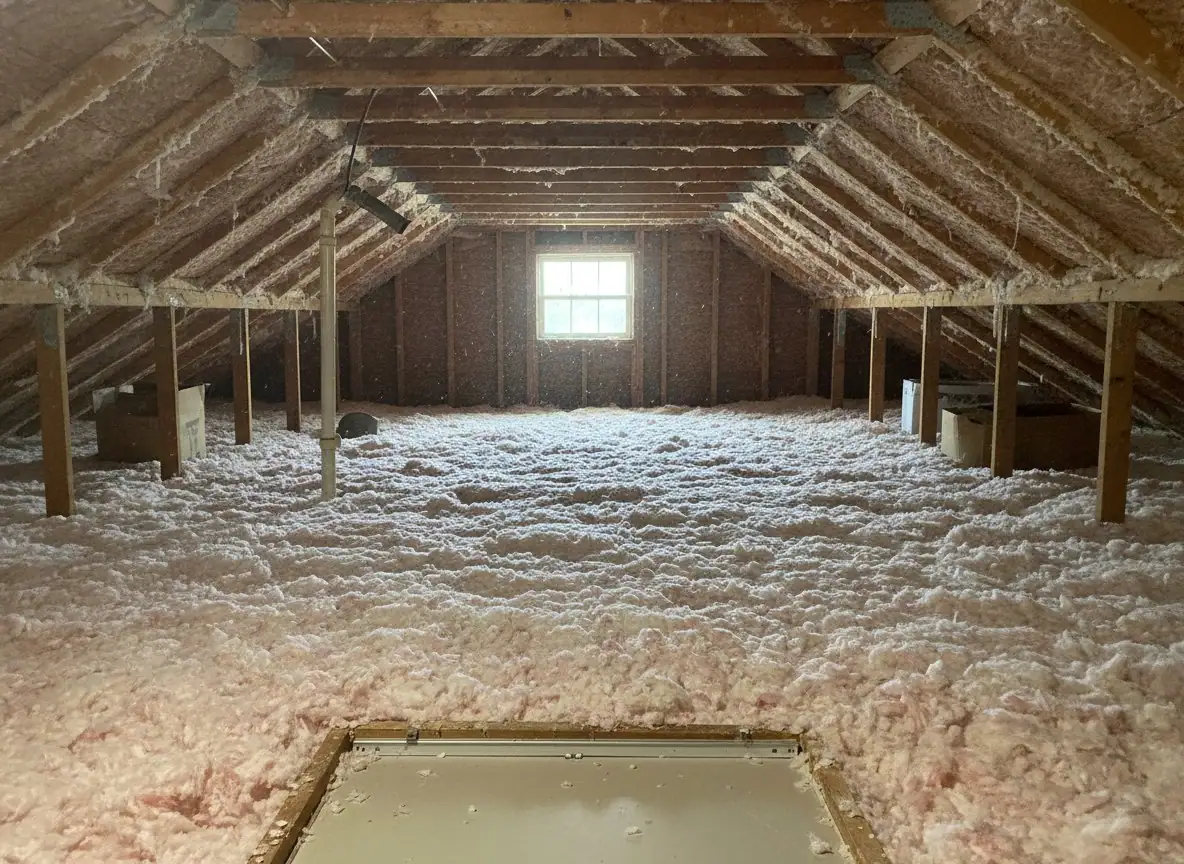
Newport Beach Neighborhoods We Serve
Balboa Peninsula and Balboa Island
These waterfront communities feature densely packed homes, many built between 1920 and 1960, on narrow lots with limited attic access. The extreme proximity to Newport Harbor means salt air and humidity are constant challenges. We specialize in navigating the tight attic spaces common in these bungalow and cottage-style homes while delivering full closed-cell foam coverage for maximum moisture protection.
Corona del Mar
Corona del Mar’s mix of post-war cottages and contemporary luxury estates presents diverse attic configurations. Many 1950s and 1960s-era homes in this neighborhood have original fiberglass insulation that has degraded significantly. Our insulation replacement service is particularly in demand here, where homeowners are undertaking comprehensive renovations to bring properties to modern performance standards.
Harbor View Hills and Bonita Canyon
These inland Newport Beach neighborhoods feature larger homes built primarily between 1970 and 2000, with vaulted ceilings and complex rooflines that benefit from unvented hot-roof spray foam assemblies. Lower coastal humidity exposure makes open-cell foam a cost-effective choice for many properties in this area.
Newport Heights and Cliff Haven
Among Newport Beach’s oldest residential neighborhoods, with homes dating to the 1930s and 1940s, Newport Heights and Cliff Haven properties frequently need complete insulation system overhauls. Original knob-and-tube wiring considerations are assessed before any foam application in these historic homes.
Attic Insulation Maintenance Tips for Newport Beach Homeowners
- Annual Visual Inspection: Check your attic each spring before marine layer season begins (April–May) to identify any new penetrations, settling, or moisture staining that developed over winter.
- Monitor Attic Humidity: Install an inexpensive digital hygrometer in your attic. Newport Beach coastal attics should remain below 60 percent relative humidity. Readings consistently above this threshold warrant investigation of ventilation or vapor control.
- Seal New Penetrations Promptly: Any new HVAC, electrical, or plumbing work that penetrates the attic should be sealed with fire-rated foam or caulk within 30 days of installation — before the next marine layer season creates moisture infiltration opportunities.
- Inspect HVAC Duct Connections: Attic duct connections are a common source of conditioned air loss. Check that all joints remain sealed annually, particularly after seismic activity common in Southern California.
- Clear Soffit Vents: In vented attic assemblies, ensure soffit vents remain clear of blown-in insulation, bird nesting material, or debris — a particular concern near Newport Beach’s coastal vegetation corridors.
- After Wildfire Events: Following regional fire events like the 2020 Silverado or Bond fires, inspect your attic for ash infiltration and check that foam integrity has not been compromised by heat exposure near vents.
- Professional Re-Inspection Every 5–7 Years: Schedule a professional attic assessment to verify insulation performance, check for foam shrinkage or delamination, and assess whether evolving Title 24 standards warrant supplemental upgrades.
Why Choose Energy Wise Attic Insulation in Newport Beach
Energy Wise Attic Insulation brings focused expertise in Southern California coastal insulation challenges. Our technicians are trained specifically in the humidity and salt-air conditions that affect Newport Beach’s diverse housing stock — from the 1930s bungalows of Cliff Haven to the contemporary estates of Bonita Canyon. We do not apply one-size-fits-all solutions. Every Newport Beach project begins with a thorough site assessment that accounts for your home’s age, construction type, microclimate exposure, and HVAC configuration.
We serve all of Newport Beach’s neighborhoods and surrounding Orange County communities including Irvine, Huntington Beach, Costa Mesa, and Laguna Beach. Our full-service capabilities include attic insulation, blow-in insulation, crawl space encapsulation, and complete insulation removal — allowing us to handle every aspect of your home’s thermal envelope without subcontracting.
We are committed to transparent pricing, thorough workmanship, and clear communication from first call to final walkthrough. Contact us at (949) 828-0703 to speak with a Newport Beach insulation specialist today.

FAQ
Frequently Asked Questions: Spray Foam Attic Insulation in Newport Beach
How much does spray foam attic insulation cost in Newport Beach, CA?
Costs range from approximately $4,500 to $7,500 for open-cell foam and $7,500 to $13,500 for closed-cell foam in a typical 1,500-square-foot Newport Beach attic treated to R-38. Coastal proximity, attic accessibility, and whether existing insulation removal is required are the primary variables. We provide itemized written estimates at no charge.
Is closed-cell or open-cell foam better for Newport Beach homes?
For properties within two miles of the coast — including Balboa Island, Lido Isle, Corona del Mar, and oceanfront Balboa Peninsula — closed-cell foam is strongly recommended due to its vapor retarder properties and resistance to the high-humidity marine layer. Inland Newport Beach neighborhoods like Harbor View Hills and Bonita Canyon are appropriate candidates for open-cell foam, which offers cost savings and excellent sound control.
How long does spray foam attic insulation installation take?
Most Newport Beach residential attics can be completed in a single day — typically 6 to 10 hours including preparation, application, and cleanup. Larger homes exceeding 3,000 square feet of attic space or those requiring significant pre-work (insulation removal, major air sealing) may require two days. Foam reaches full cure within 24 hours of application, after which the attic is safe to access normally.
Will spray foam attic insulation lower my energy bills in Newport Beach?
Yes. Homes in Newport Beach that upgrade from degraded fiberglass batts to properly specified spray foam typically see HVAC energy consumption reductions of 20 to 40 percent. Coastal homes with significant marine layer air infiltration often experience the most dramatic savings because they are simultaneously correcting both insulation value deficiency and air leakage — two distinct energy loss pathways. Payback periods typically range from 4 to 8 years depending on current SCE and SoCalGas rate structures.
Can spray foam be installed over existing insulation in Newport Beach attics?
In some cases, yes. If existing blown-in or batt insulation is dry, undamaged, and free of mold, a flash coat of closed-cell foam can be applied over it to add vapor control and air sealing. However, wet, compressed, or mold-affected insulation — common in older Newport Beach coastal homes — must be removed before foam application. Our technicians assess existing conditions and recommend accordingly during the free site inspection.
Does spray foam attic insulation help with Newport Beach wildfire smoke infiltration?
Significantly. Spray foam’s air-sealing properties reduce whole-home air infiltration by 40 to 60 percent compared to unsealed attic assemblies. During air quality events like those generated by the 2020 Silverado Fire east of Irvine, or the 2017 Canyon Fire 2 near Anaheim, homes with spray-foam-sealed attics maintained notably lower indoor particulate levels. This is an increasingly valued benefit among Newport Beach residents with asthma or respiratory sensitivities.
Is spray foam attic insulation compatible with my Newport Beach home’s HVAC system?
Spray foam is compatible with virtually all HVAC configurations. For homes where heating and cooling equipment or ductwork is located in the attic — common in many Newport Beach tract homes built between 1970 and 1995 — converting to an unvented hot-roof assembly by applying foam to the underside of the roof deck actually improves HVAC efficiency by eliminating the extreme temperature swings the equipment was previously exposed to. We evaluate your specific HVAC layout during the initial assessment.
How do I find reliable spray foam attic insulation near me in Newport Beach?
When searching for spray foam attic insulation near me in Newport Beach, prioritize contractors with direct experience in Orange County’s coastal climate, who provide written proposals with specified R-values and foam types, and who conduct pre-application moisture assessments. Energy Wise Attic Insulation serves all Newport Beach neighborhoods and the surrounding Orange County region. Call (949) 828-0703 to schedule your on-site assessment.
Get a Free Spray Foam Attic Insulation Estimate in Newport Beach Today
Your Newport Beach home deserves an insulation solution built for the coastal Southern California environment — not a generic approach designed for inland climates. Whether your property sits steps from Newport Harbor on Balboa Island, perches above the Pacific in Corona del Mar, or occupies an inland lot in Harbor View Hills, Energy Wise Attic Insulation has the expertise and equipment to deliver results that perform for decades.
Stop overpaying on energy bills. Stop tolerating uneven temperatures between floors. Stop allowing marine layer moisture to degrade your home’s structure and indoor air quality. Take action today.
- Call us: (949) 828-0703
- Request a free assessment for your Newport Beach property
- Ask about current SCE and SoCalGas rebate eligibility
Energy Wise Attic Insulation — Newport Beach’s coastal insulation specialists. We also serve Irvine, Costa Mesa, Huntington Beach, Laguna Beach, and all of Orange County. Call (949) 828-0703 now.
Get in touch
Find insulation help near you
Request a free estimate online or give us a call — our team will follow up quickly.
- Call us(949) 828-0703
- Visit1400 Quail St, Newport Beach, CA 92660
- HoursMon-Sun 07:00-19:00